

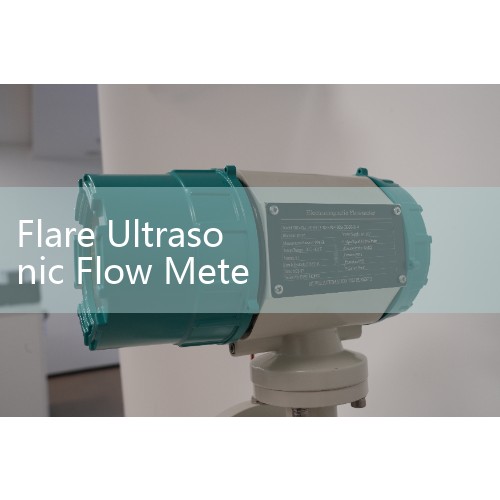
『Flare Ultrasonic Flow Meter Technology: High-Velocity Gas Monitoring in Petroleum Refineries』Related information(clamp on meter|electromagnetic meter|venturi meterrotameter|orifice meter|ultrasonic flow meter|mass flow meter|coriolis mass flow meter|coriolis flow meter|magnetic flow meter|magmeter flow meter|magflow flow meter|mag meter flow meter|electromagnetic flow meter|vortex flow meter|turbine flow meter|thermal mass flow meter|thermal flow meter|rotameter flow meter)
Flare Ultrasonic Flow Meter Technology: High-Velocity Gas Monitoring in Petroleum Refineries
Quick Answer: Flare ultrasonic flow meters measure high-velocity gas in refinery flare headers with no pressure drop and a wide turndown ratio. Silver Automation Instruments supplies inline flare gas ultrasonic meters for pipe sizes from DN50 to DN600. Send us your gas pressure in bar, temperature in °C, pipe size DN, gas composition, and flow range for a model recommendation.
The Flare Gas Measurement Problem in a Refinery
Refinery flare lines are not steady. Gas velocity can shift from 0.2 m/s to 80 m/s in a few minutes. Pressure often sits near 0.3 to 1.5 bar g. Temperature changes with the source unit from minus 40 to plus 150 °C. Gas composition can include hydrogen, methane, ethylene, H2S, CO2, nitrogen, and steam. This mix is not stable hour by hour.
Many flow meter types fail in this service. Orifice plates create permanent pressure loss. Thermal mass meters drift when gas composition changes. Vortex meters lose signal below 3 m/s. Turbine meters have moving parts that can jam from soot or sticky hydrocarbons. In practice, most engineers skip devices with moving parts for flare gas.
We have seen this on customer sites in Malaysia and Saudi Arabia. A DN300 flare header may run at 3 m/s one hour and 60 m/s the next. The meter must stay on range without changing settings.
How Transit Time Ultrasonic Flare Meters Work in High-Velocity Gas
Transit time ultrasonic meters send pulses between two or more transducers. One pulse travels with the gas flow. Another pulse travels against the gas flow. The meter measures the difference in flight time. That difference is proportional to gas velocity.
A four-path model uses four acoustic paths in one spool. This helps correct for swirl and asymmetric flow after elbows or valves. Because flare headers often have short straight runs, four-path accuracy matters. The meter can still read velocity above 80 m/s. Turndown ratio can reach 100 to 1 or better.
The wetted transducers can be titanium or stainless steel. Titanium is common for sour gas with H2S or wet flare gas. There are no moving parts. There is no pressure drop. The pipe bore stays open. That is a big advantage for flare systems where backpressure is a safety concern.
Key Specifications for Refinery Flare Applications
Here is the thing. You need to match the meter to actual flare conditions. For most refinery flare headers, Silver Automation Instruments recommends inline transit time ultrasonic meters with these specs.
Pipe sizes from DN50 to DN600 for inline spool pieces. Larger lines above DN600 can use insertion or multi-path configurations. Flange ratings are typically ANSI 150 to 600 or DIN PN16 to PN100. Process pressure should be specified from 0.3 bar g to 15 bar g. Process temperature range is usually minus 40 to plus 150 °C. Accuracy for a four-path meter is about 1 percent of reading at velocities above 3 m/s. Repeatability is around 0.2 percent.
Outputs include 4-20 mA HART, Modbus RTU, and pulse. Some refinery DCS systems want HART for diagnostics. Others pull Modbus RTU over RS485. The meter can run on 24 V DC or 85 to 264 V AC. For hazardous areas, select ATEX Zone 1 with Ex db IIC T6 Gb or Zone 2 with Ex ec IIC T5 Gc. Ingress protection should be IP66 or IP67.
Because flare gas often contains moisture, a PT100 can be installed for temperature compensation. The flow computer converts actual cubic meters per hour to Nm3/h or kg/h. You need to send the gas composition so we can set the correct molecular weight and speed of sound.
Straight Run and Installation Notes
A four-path ultrasonic meter still needs some straight pipe. A common rule is 10D upstream and 5D downstream. If the meter is installed after a control valve or elbow, you may need a flow conditioner. Without enough straight run, the flow profile becomes distorted and accuracy drops.
For flare headers, install the meter in a location that stays full of gas. Avoid low

We usually recommend a block valve and transducer removal tool if the meter will be serviced under pressure. This matters in a live flare header. Shutdown and purge may not be easy.
Why Silver Automation Instruments Fits Refinery and EPC Projects
Silver Automation Instruments supplies process instruments to refineries, EPC contractors, and distributors in Southeast Asia, the Middle East, Latin America, and Africa. We handle not only ultrasonic flare meters but also Coriolis mass flow meters, electromagnetic flow meters, vortex flow meters, and pressure transmitters. That helps when a project has multiple instruments on one purchase order.
A refinery in Malaysia ordered a DN350 four-path ultrasonic flare meter for a sour flare line. The gas contained up to 8 percent H2S and high moisture. We provided titanium transducers, Ex db IIC T6 Gb protection, and 4-20 mA HART output to the DCS. The meter was installed after a knockout drum to reduce liquid carryover.
A customer in Vietnam asked for a DN150 flare meter replacement because the old thermal mass meter drifted weekly. We supplied an inline transit time meter with a PT100 and Modbus RTU. The field team verified the signal at 0.5 bar g and 18 percent methane content. This is the kind of detail we ask for before quoting.
Common Selection Questions
Most engineers skip this part, but the gas composition is the biggest unknown. H2S content drives transducer material. Moisture content drives sealing and low-point installation. Hydrogen content changes the speed of sound. We do not need a perfect lab analysis. A typical range of mole percent for each component is enough for a first model.
For high-velocity flare gas, inline four-path models are preferred above DN200. Below DN150, a two-path model often meets the same 1 percent accuracy. For pipe sizes over DN600, insertion ultrasonic meters reduce cost and weight. But insertion models need more care with insertion depth and flow profile.
FAQ
1. Can an ultrasonic flare meter measure velocities above 80 m/s?
Yes. Many four-path transit time meters can read up to 100 m/s. The transducer update rate and signal processing need to be set for high velocity. Tell us the peak velocity when requesting a quote.
2. What is the minimum pressure for a flare ultrasonic flow meter?
Many models operate at 0.3 bar g or even near atmospheric pressure. Signal strength drops at very low pressure, especially in hydrogen-rich gas. We check the speed of sound and gas density before proposing a model.
3. Will wet gas or H2S damage the meter?
Not if you select titanium transducers and proper elastomer seals. Wet gas can cause liquid droplets to coat transducers. A knockout drum or drain upstream helps maintain signal quality.
4. What outputs does Silver Automation Instruments provide?
Standard outputs are 4-20 mA HART, pulse, and Modbus RTU. Some projects use Modbus TCP. We can include PT100 input and pressure transmitter input for standard flow calculation.
5. What is the lead time for a flare ultrasonic flow meter?
Standard DN50 to DN300 models usually ship in 4 to 6 weeks. Larger sizes and custom flange ratings may take 8 to 10 weeks. Send your DN, pressure rating, gas composition, and hazardous area class for a firm date.
Get a Model Recommendation
Send us your flare gas pressure in bar, temperature in °C, pipe size DN, gas composition, and flow range. We will reply with a model, accuracy statement, and price. Contact Silver Automation Instruments. Tel: +86-25-68650347. WhatsApp: +86-25-52155837. WeChat: +86 15365082610. Website: flow-meter.com.au
 Hot Product
 Related AD