

『Liquid Ammonia Flow Meter Sizing: Hazardous Explosion-Proof Coriolis Mass Flow Transmitters』Related information(clamp on meter|electromagnetic meter|venturi meterrotameter|orifice meter|ultrasonic flow meter|mass flow meter|coriolis mass flow meter|coriolis flow meter|magnetic flow meter|magmeter flow meter|magflow flow meter|mag meter flow meter|electromagnetic flow meter|vortex flow meter|turbine flow meter|thermal mass flow meter|thermal flow meter|rotameter flow meter)
Liquid Ammonia Flow Meter Sizing and Explosion Proof Coriolis Mass Flow Transmitters
Quick Answer: For liquid ammonia custody transfer or batching, size the Coriolis mass flow meter by mass flow in kg/h, not by volumetric flow. Use a Silver Automation Instruments hazardous explosion proof transmitter with ATEX Zone 1 or Zone 2 certification and 316L stainless steel wetted parts. Send us your pressure in bar, temperature in Celsius, pipe size in DN, and flow range for a direct quotation.
Liquid ammonia flow measurement is not a place for guesswork. The fluid has low viscosity around 0.25 cP at minus 33 Celsius. Density shifts with temperature and line pressure. A Coriolis meter reads mass flow directly. That removes compensation errors you get with turbine meters or orifice plates.
Why Mass Flow Beats Volumetric Flow for Ammonia
Most engineers skip this part, but liquid ammonia density changes from about 682 kg/m3 at minus 33 Celsius to around 610 kg/m3 at 20 Celsius under saturation pressure. A volumetric meter sees the same volume and reports a different mass. That error can reach several percent on a long unloading line. Because a Coriolis meter measures mass, the reading stays correct even when temperature or pressure moves. This matters for truck loading, railcar unloading, and batching reactors.
Here is the thing we have seen on customer sites many times. A plant installs a turbine meter on a 2 inch ammonia line. The meter reads fine at one temperature. Then a hot day changes the stored ammonia temperature. The mass balance no longer closes. We replaced one such meter for a customer in Vietnam last year. The line was DN50. The new Coriolis meter cut the error from over 8 percent to under 0.2 percent.
Sizing Data That Actually Matters
You need four numbers before you select a liquid ammonia flow meter: minimum flow, maximum flow, operating pressure, and operating temperature. Typical sizing ranges for Silver Instruments Coriolis mass flow transmitters are as follows. DN15 handles 0 to 3,000 kg/h. DN25 handles 0 to 10,000 kg/h. DN50 handles 0 to 40,000 kg/h. DN80 handles 0 to 100,000 kg/h. DN100 handles 0 to 200,000 kg/h. These are common ranges, not fixed limits. We check the pressure drop for your conditions.
Keep the meter back pressure at least 0.5 bar above the liquid ammonia vapor pressure. This prevents flashing inside the tubes. Ammonia at 20 Celsius needs about 8.5 bar absolute pressure to stay liquid. If your line pressure is close to that value, tell us. We may recommend a larger meter to reduce pressure drop or a pump change.
For a DN25 line with 2,000 kg/h of liquid ammonia, a DN15 meter may create too much pressure loss. A DN25 meter gives lower head loss but may weaken low flow accuracy near 50 kg/h. This is why we ask for the turndown. Do not simply match the line size. Match the mass flow range to the process.
Explosion Proof Requirements for Ammonia Service
Liquid ammonia is flammable under many storage and handling conditions. Most sites classify ammonia loading and unloading areas as Zone 1 or Zone 2 depending local codes and ventilation. Silver Instruments supplies hazardous explosion proof Coriolis mass flow transmitters with ATEX and
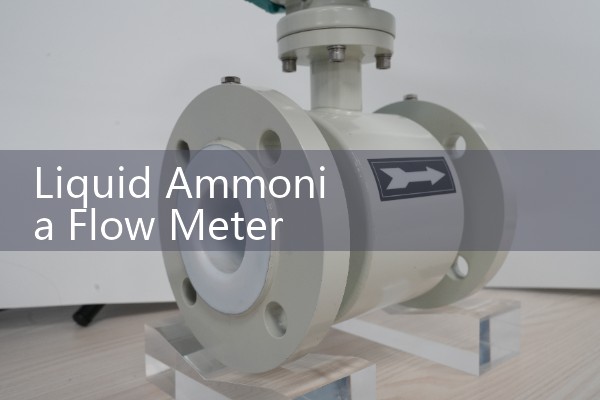
In practice, we recommend a remote mounted transmitter for ammonia service. The sensor stays on the pipe. The display and terminal box sit on a wall or bracket 2 to 10 meters away. This keeps electronics away from line vibration, ammonia vapors, and rain. It also makes startup and zero calibration easier.
Materials and Installation Notes
Use 316L stainless steel wetted parts for liquid ammonia. Avoid copper, brass, bronze, zinc, and aluminum. Ammonia attacks those metals. Silver Instruments standard Coriolis mass flow meter tubes and manifolds are 316L stainless steel. For most clean ammonia applications you do not need Hastelloy. If your stream contains traces of oil or acid, tell us before you buy.
Install the sensor where the pipe is full. Avoid high points where vapor can collect. The meter does not need long straight runs because Coriolis sensing is not velocity based. But you must solidly support the pipe on both sides and perform a zero calibration after installation. Fill the line with liquid ammonia, close the isolation valves, wait for bubbles to rise, and zero the meter.
For loading racks, mount the Coriolis meter after the pump and before the loading arm. Keep the meter as low as practical. This reduces vapor breakout. If you batch ammonia into small containers, use a downstream control valve or batch controller with a pulse output from the transmitter.
FAQ
Does a Coriolis mass flow meter work for liquid ammonia at minus 33 Celsius?
Yes. The sensor works at low process temperatures. Standard transmitters handle process temperatures down to minus 200 Celsius depending model. For ammonia at minus 33 Celsius, 316L tubes and standard electronics are fine.
Do I need Zone 1 or Zone 2 certification for a liquid ammonia meter?
Most ammonia storage and handling areas need at least Zone 2. Some enclosed pump rooms need Zone 1. Send us your hazardous area drawing or area classification. We will quote the correct ATEX or IECEx approval.
What flow range should I specify for a DN25 ammonia line?
A DN25 Coriolis mass flow meter with 0 to 10,000 kg/h covers many batching and unloading jobs. But we need your minimum and maximum flow. Turndown on a Coriolis meter is typically 20 to 1 or better. If the minimum flow is below 5 percent of range, we may select a smaller sensor or accept a lower accuracy at that point.
Can a Coriolis meter measure ammonia mass flow without a separate density meter?
Yes. The meter measures mass flow, density, and temperature at the same time. You do not need pressure and temperature compensation for mass flow. Some customers also use the density output for product quality checks.
How do I get a quotation from Silver Instruments?
Send us your pressure in bar, temperature in Celsius, pipe size in DN, flow range in kg/h, and hazardous area classification. Use Tel: +86-25-68650347, WhatsApp: +86-25-52155837, or WeChat: +86 15365082610. We reply within 24 hours on business days.
 Hot Product
 Related AD