

『Fit Flow Meter Balancing Systems: Adjusting Fluid Flow Rates in Thermal Piping Networks』Related information(clamp on meter|electromagnetic meter|venturi meterrotameter|orifice meter|ultrasonic flow meter|mass flow meter|coriolis mass flow meter|coriolis flow meter|magnetic flow meter|magmeter flow meter|magflow flow meter|mag meter flow meter|electromagnetic flow meter|vortex flow meter|turbine flow meter|thermal mass flow meter|thermal flow meter|rotameter flow meter)
Fit Flow Meter Balancing Systems: Adjusting Fluid Flow Rates in Thermal Piping Networks
Quick Answer: Flow meter balancing systems measure and adjust fluid flow rates in thermal piping networks such as district heating, district cooling, and HVAC loops. Electromagnetic flow meters and Coriolis mass flow meters work best for water based thermal networks. Silver Instruments supplies both types with 4 to 20 mA HART output and specific sizing for DN15 to DN300 pipes.
Thermal piping networks move hot water, chilled water, or thermal oil between boilers, chillers, heat exchangers, and terminal units. Balancing these networks means adjusting fluid flow rates so each branch receives the right share of heat or cooling. Without flow meters, balancing is guesswork. Too much flow in one loop starves another loop. That causes uneven building temperatures, high pumping costs, and equipment wear. We supply flow meters for balancing systems to contractors and plant teams in Southeast Asia, the Middle East, and Latin America.
Why Thermal Piping Networks Need Balancing
A thermal network often has multiple branches. Each branch has a different pipe length, diameter, and pressure drop. If you do not balance the network, water takes the path of least resistance. One branch gets excessive flow. Another branch gets almost no flow. In practice, this shows up as a hotel in Jakarta where some rooms are too hot and others too cold. Most engineers skip this part during commissioning because it takes time. But unbalanced networks raise energy cost by 10 to 30 percent. Flow meters give you the data to set balancing valves correctly. You measure flow, adjust a valve, and measure again. That is the basic method.
Flow Meter Types for Thermal Piping Networks
Silver Instruments offers three main flow meter types for balancing thermal piping systems.
Electromagnetic flow meters are the most common choice for water and water glycol loops. They work on conductive liquids. They have no moving parts. That means less maintenance in closed loop systems. We supply models from DN15 to DN1200 with PTFE or rubber liners.
Coriolis mass flow meters handle thermal oil, brine, and high temperature fluids. They measure mass flow, density, and temperature in one device. This helps when you need to monitor heat energy transfer. Coriolis meters cost more but provide mass flow accuracy of plus or minus 0.1 to 0.2 percent.
Ultrasonic flow meters work as clamp on or inline devices. Clamp on models help when you cannot shut down a thermal network. Inline models give better accuracy for clean water. We often supply ultrasonic meters for retrofit balancing jobs in existing buildings.
Selecting the Right Meter for Thermal Balancing
You need four data points before you request a quote. First, know the pipe size. Common thermal network pipes range from DN25 to DN300. Second, know the flow range. For example, a branch might operate between 2 and 20 cubic meters per hour. Third, know the fluid temperature. Standard electromagnetic flow meters work up to 120 degrees Celsius. For district heating above 150 degrees Celsius, we recommend a high temperature model or a Coriolis meter. Fourth, know the fluid type. Water, water glycol, brine, or thermal oil each need different liner and electrode materials.
In practice, a customer in Vietnam asked us for a flow meter to balance a cooling water network. The pipe was DN80, the fluid was chilled water at 7 degrees Celsius, and the normal flow was 12 cubic meters per hour. We supplied an electromagnetic flow meter with 4 to 20 mA HART output. The plant team connected it to their building management system and balanced the network in one afternoon.
Installation Practices That Improve Accuracy
Installation errors cause more balancing problems than meter defects. For electromagnetic flow meters, keep the sensor full of liquid at al
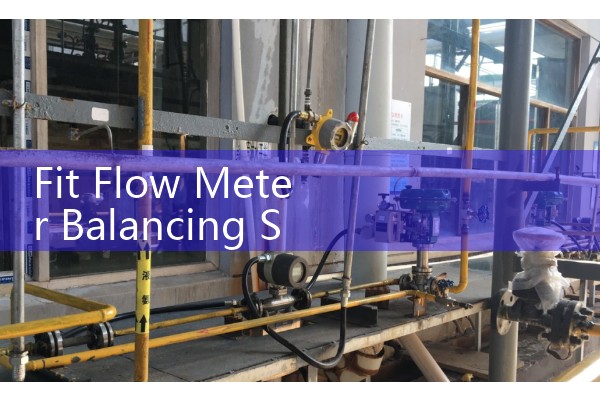
Signal wiring matters too. Use shielded cable for 4 to 20 mA HART signals. Keep signal cables away from variable frequency drives. We have seen this on customer sites many times where noise from a drive caused a flow reading to jump by 20 percent. A simple cable reroute fixed it.
Common Problems and Fixes
Problem one, air bubbles in the liquid. Air causes the reading to spike or drop. Fix the system pressure or install an air release valve upstream. Problem two, suspended solids in cooling water. This can fill the liner of an electromagnetic meter and reduce accuracy. Choose a meter with an abrasion resistant liner. Problem three, low flow during startup. Some branches only see flow during peak demand. Select a meter with a wide turndown ratio. Silver Instruments electromagnetic meters offer a turndown ratio of 100 to 1. Problem four, reverse flow. Thermal networks sometimes reverse flow during valve switching. Our meters can measure reverse flow and totalize it separately.
Silver Instruments Contact and Quote Details
Silver Automation Instruments supplies flow meters and balancing systems to customers in Southeast Asia, Oceania, Latin America, Africa, and the Middle East. We work with industrial end users and distributors in oil and gas, water and wastewater, chemical, food and beverage, and marine sectors. To get a specific quote, send us your pressure in bar, temperature in degrees Celsius, pipe size in DN, and flow range in kg/h or cubic meters per hour. Also tell us your fluid type and whether you need a display or just an analog output.
You can reach our team by phone at +86-25-68650347. Contact us on WhatsApp at +86-25-52155837. WeChat is +86 15365082610. Our engineers respond within 24 hours on business days.
FAQ: Flow Meter Balancing Systems for Thermal Networks
Which flow meter is best for a thermal piping network? For water based thermal networks, an electromagnetic flow meter is the most practical choice. It handles conductive water, has no moving parts, and works from DN15 to DN1200. For thermal oil or brine at high temperatures, a Coriolis mass flow meter may be better because it measures mass directly. For retrofit jobs where you cannot stop the flow, a clamp on ultrasonic flow meter works.
Can flow meters help reduce energy use in district heating? Yes. Balancing the network with flow meter data prevents overflow to some branches and underflow to others. Pumps do not work harder than needed. Buildings get the right amount of heat transfer. Many plants see energy savings of 10 to 30 percent after proper balancing.
What information do I need to get a quote for a balancing flow meter? Send us the pipe size in DN, fluid type, fluid temperature in degrees Celsius, operating pressure in bar, and normal flow range. We also need to know if the application is hot water, chilled water, thermal oil, or another fluid. A short description of the control system interface helps, such as 4 to 20 mA HART or Modbus.
Do you supply flow meters for hazardous areas in thermal networks? Yes. We offer electromagnetic and Coriolis flow meters with ATEX Zone 1 certifications. These models suit thermal oil systems in chemical plants or refineries. Provide the hazardous area classification when you request a quote.
How long does delivery take? Most balancing flow meters ship within 7 to 15 days after order confirmation. Custom liners or special high temperature versions may take longer. We ship from our factory to Southeast Asia, Oceania, the Middle East, Africa, and Latin America by air or sea.
 Hot News
 Related AD