

『Cement flowmeter』Related information(clamp on meter|electromagnetic meter|venturi meterrotameter|orifice meter|ultrasonic flow meter|mass flow meter|coriolis mass flow meter|coriolis flow meter|magnetic flow meter|magmeter flow meter|magflow flow meter|mag meter flow meter|electromagnetic flow meter|vortex flow meter|turbine flow meter|thermal mass flow meter|thermal flow meter|rotameter flow meter)

1. Working principle of baffle flowmeter
The working principle of baffle flowmeter is as follows:
1. Basic measurement principle The working principle of baffle flowmeter is based on fluid dynamics and torque balance principle. When the measured medium passes through the flowmeter, the fluid exerts a force on the baffle, causing it to open. As the flow rate changes, the opening of the baffle also varies. At a specific flow rate, the torque exerted by the fluid on the baffle and the torque of the internal torsion spring of the flowmeter reach a balanced state, at which point the baffle has a certain degree of opening. There is a one-to-one correspondence between the opening of these pants and the corresponding traffic.
2. Signal Transmission and Indication The baffle flowmeter converts the opening of the baffle into a measurable signal through a series of mechanical and magnetic transmission systems, and transmits it to the meter head.
. The pointer inside the meter indicates the instantaneous fluid flow rate through the flowmeter on the dial. This process achieves visual monitoring of traffic.Thirdly, the signaling device and control are equipped in the indicator mechanism of the baffle flowmeter.
. This device can emit a contact signal at any point within the flow range of the flowmeter, which is used to achieve the function of flow limit alarm or control. The maximum power allowed for the transmitter is 2W, and the operating voltage should not exceed 24V (DC) to ensure the safe operation of the equipment. 4. Application Scope: As a pointer type instantaneous flowmeter, the baffle flowmeter has unique measurement principles and a wide range of application fields. It is mainly used i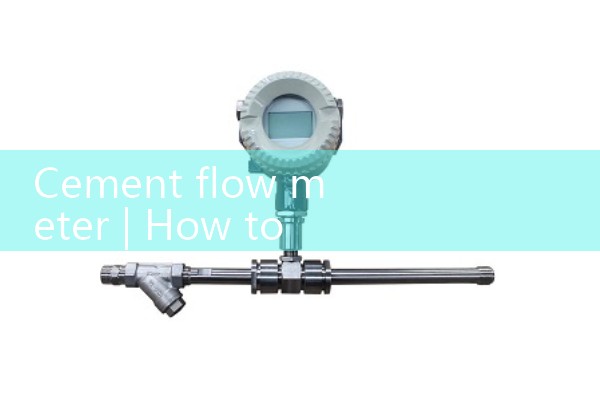
2. What is the principle of a Venturi flowmeter and how to use it to measure flow?
A Venturi flowmeter is a differential pressure flow measurement device suitable for various fluids such as air, natural gas, coal gas, and water.
. It measures fluid flow rate through the law of conservation of energy, Bernoulli equation, and flow continuity equation. When the fluid passes through the contraction part inside the Venturi flowmeter, the flow velocity increases, the static pressure decreases, and a pressure difference is formed. By measuring this pressure difference, the fluid flow rate can be determined. The design structure of the Venturi flowmeter is simple, suitable for various working conditions, and easy to monitor in real time. Therefore, it has been widely used in many energy and power industries such as gas, electricity, and cement. Its saving parts have unique geometric shapes, which can effectively adjust the velocity distribution of the fluid inside the pipe before throttling, reduce sharp edge wear and fouling problems, and ensure measurement accuracy and stability. The specific steps for measuring flow using a Venturi flowmeter include: first, opening the flow control valve, overflow valve, and drain valve, starting the water pump to maintain the overflow state of the water tank, and ensuring stable water level and liquid transport during measurement. Next, quietly lift the car, close the Hot News
 Related AD