

『FSMA Compliant Flow Meter Sanitary Standards for Food and Beverage Production』Related information(clamp on meter|electromagnetic meter|venturi meterrotameter|orifice meter|ultrasonic flow meter|mass flow meter|coriolis mass flow meter|coriolis flow meter|magnetic flow meter|magmeter flow meter|magflow flow meter|mag meter flow meter|electromagnetic flow meter|vortex flow meter|turbine flow meter|thermal mass flow meter|thermal flow meter|rotameter flow meter)
FSMA Compliant Flow Meter Sanitary Standards for Food and Beverage Production
Quick Answer: FSMA compliant flow meters for food and beverage production must meet 3-A, EHEDG, or FDA material standards. Silver Instruments offers Coriolis and electromagnetic sanitary flow meters with surface finish Ra ≤ 0.8 µm, tri-clamp connections, and full traceability. Send your pipe size, temperature, and CIP flow rates to [email protected] for a direct model recommendation.
Food safety audits now pull in flow meter specs. A plant can lose a major retail contract if a single instrument lacks the right sanitary certificate. The Food Safety Modernization Act (FSMA) in the United States shifted the focus from reacting to contamination toward preventing it. For flow measurement, that means every wetted part must be cleanable, drainable, and verifiable. Most engineers we talk to in Southeast Asia and the Middle East first ask about 3-A or EHEDG compliance. Here is the thing: FSMA itself does not issue certificates for flow meters. Instead, it requires that equipment used in food processing be designed to prevent adulteration. That is where third-party sanitary standards fill the gap.
Why FSMA Puts Flow Meters Under Inspection
FSMA regulation 21 CFR Part 117 cites sanitary design as a preventive control. For a flow meter installed on a milk receiving line or between a pasteurizer and filler, the risk sits in surface roughness, dead legs, and seal materials. Inspectors look for crevices where bacteria can survive CIP cycles. They check if the meter body is self-draining when the line is shut down. In practice, this forces a shift away from general industrial meters toward hygienic designs. We have seen customers in Australia replace perfectly functional vortex meters simply because the gasket material could not be traced to FDA 21 CFR.
Sanitary Standards That Prove Compliance
Three standards dominate global food and beverage production. 3-A Sanitary Standard defines material, surface finish, and cleanability criteria for milk and dairy applications. EHEDG certification covers Europe and extending to Asia, focusing on bacterial ingress and cleanability testing. FDA 21 CFR Part 177 covers polymer and elastomer substances in contact with food. A flow meter combining a 3-A marked sensor with FDA approved EPDM seals generally passes an FSMA-focused audit without fuss. But the paper trail matters just as much as the hardware.
For a yogurt plant in Thailand ordering an electromagnetic flow meter, we provide a material certificate listing the exact stainless steel grade, the electropolished surface roughness value, and the seal compound batch number. This traceability satisfies FSMA section 117.190 on records. Without it, the plant quality manager may spend hours cross referencing supplier emails during an unannounced FDA visit.
Flow Meter Technologies That Fit FSMA Production Lines
Coriolis mass flow meters dominate sanitary liquid batching. They measure mass directly, cope with viscosity changes from cream to liquid sugar, and have a straight tube or dual bent tube design that withstands prolonged CIP cycles at 130 °C. A major chocolate maker in Malaysia runs Silver Instruments Coriolis meters 20 hours a day with pure steam cleaning between batches. The surface finish inside the tubes stays at Ra 0.4 µm after two years, well under the 0.8 µm limit. No dead legs, no gasket grooves that trap solids.
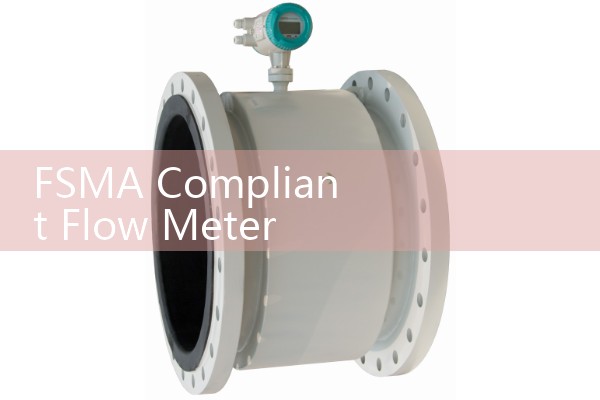
Electromagnetic flow meters suit high flow applications like raw milk intake or CIP return lines. A full bore magmeter with a sanitary liner made of PFA or EPDM and tri-clamp process connections clears audits quickly. The key is that the electrode design must be flush. Protruding electrodes create micro pockets. We ship sanitary magmeters to a juice bottler in Nigeria where CIP sequence validation proved flow velocities above 1.5 m/s are enough to scour any film from the liner. The meter has no moving parts, so maintenance stays low, an important factor for small to medium processors.
Ultrasonic clamp on meters are gaining ground on lines where modifying the pipe is impossible. They measure through the pipe wall and therefore have no wetted parts. FSMA inspectors accept them for product tracking if the clamp on unit is permanently installed and the coupling material is food safe. A wine exporter in Chile uses clamp on ultrasonic flow meters from Silver Instruments to monitor transfer flow without breaking into the stainless piping. This avoids weld inspections and keeps the line fully drainable.
Oval gear flow
Surface Finish, Connections, and Drainability
CIP fluid must reach every surface that contacts food. Roughness is the first gate. An Ra value above 0.8 µm allows microscopic adhesion. Silver Instruments polishes sanitary flow meters to Ra ≤ 0.4 µm as standard. This exceeds the baseline and gives confidence during swab tests after cleaning. The connection style matters equally. Tri-clamp (ISO 2852 or DIN 32676) dominates because it eliminates threads and uses a single gasket. The meter bore must align concentric with the pipe so no step or gap collects residue.
Drainability is harder to prove. A meter installed horizontally must tilt slightly toward the outlet. We always ask process engineers: can this meter completely empty by gravity when the pump stops? If the answer is no, the installation fails FSMA intent. In a recent project for a condensed milk line in Indonesia, we suggested a Coriolis meter with a vertical installation so product never sits inside after shutoff. The engineer reported zero micro counts after one month of production, confirming drainability.
Documentation: The Hidden Half of FSMA Compliance
A flow meter being clean by design is only half the story. FSMA section 117.190 requires records demonstrating preventive controls are implemented. The supplier must deliver a Declaration of Conformity, material certificates (EN 10204 Type 3.1), surface roughness test reports, and elastomer FDA compliance letters. Silver Instruments packs these documents in shipment boxes with a QR code linking to digital copies. For a dairy processor in Kenya, this practice cut the audit preparation time from two days to a morning.
Calibration certificates also play a role. A flow meter used for final package fill volume must be traceable to national standards. We supply calibration at multiple points across the operating range, often 25%, 50%, 75%, and 100% of span. A water calibration suffices for most sanitary fluids because the medium is newtonian. For high viscosity products above 100 cP, a Coriolis meter calibrated on a matched fluid avoids bias errors that auditors question.
FAQ
Can a standard industrial flow meter be used for food application after cleaning? Not for product contact. Polishing the internal surface to Ra < 0.8 µm is not possible in the field. The meter body may have crevices or non-sanitary gaskets that compromise FSMA preventive controls.
What is the best flow meter for CIP return line that sees strong chemicals? A sanitary electromagnetic flow meter with a PFA liner and Hastelloy C-22 electrodes. It handles caustic soda and nitric acid at 85 °C while maintaining electrical conductivity required for measurement.
Does Silver Instruments provide 3-A certified Coriolis meters? Yes. Our sanitary Coriolis meters come with 3-A symbols and EHEDG certification for specific tube configurations. Mention your audit requirements and we will ship the correct model with full documentation.
How often should flow meters be recalibrated in a food plant? Annually for critical control points, or according to your HACCP plan schedule. Some juice plants recalibrate every six months during off season maintenance. We offer on site calibration support in Southeast Asia and the Middle East through partner engineers.
Can I get a sanitary flow meter for a small pilot plant making nut milk? Absolutely. We supply compact DN10 and DN15 Coriolis meters suitable for bench top fryers, small HTST skids, and pilot kettles. Ask for a quotation with your pipe OD and connection preference.
Direct Engineering Support and Quotation
Send your process data and we reply with a specific model code, not a catalog list. Include the fluid name, temperature range, pipe size (DN), maximum flow rate in kg/h or L/min, and connection standard. Reach our food and beverage metering team at [email protected] or call +86-135-1213-1526. WhatsApp is active at 86-135-12131526, and WeChat at +86 13512131526 for quick photos and specification sheets. Silver Automation Instruments supplies FSMA ready sanitary flow meters to plants in over 40 countries, backed by 3-A and EHEDG certificates that your auditor will accept.
 Hot Blog
 Related AD