

『R1234yf Flow Meter: Automotive AC Automated Assembly Line Integration』Related information(clamp on meter|electromagnetic meter|venturi meterrotameter|orifice meter|ultrasonic flow meter|mass flow meter|coriolis mass flow meter|coriolis flow meter|magnetic flow meter|magmeter flow meter|magflow flow meter|mag meter flow meter|electromagnetic flow meter|vortex flow meter|turbine flow meter|thermal mass flow meter|thermal flow meter|rotameter flow meter)
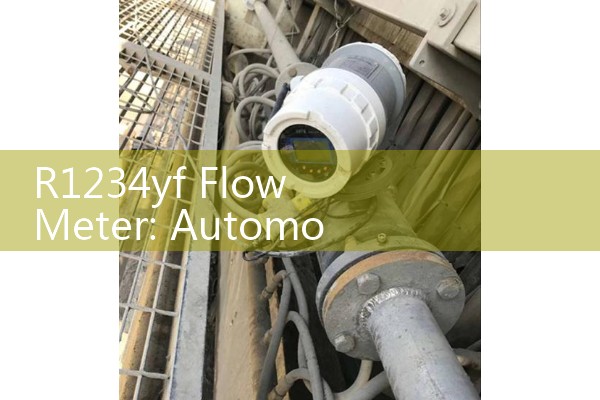
R1234yf Flow Meter: Automotive AC Automated Assembly Line Integration
Quick Answer: A Coriolis mass flow meter gives the most stable and drift‑free measurement for R1234yf refrigerant charging on high‑speed automotive AC assembly lines. It ignores viscosity and density changes that cause turbine or gear meters to drift, and it handles the fast cycle times and vibration of automated fill stations without losing accuracy. If you need repeatable fills at 500 g to 1200 g per vehicle, a DN15 Coriolis meter with 4‑20 mA HART is the practical choice.
Why R1234yf Filling Accuracy Matters on the Assembly Line
A modern automotive AC line fills R1234yf in under 45 seconds. The charge weight must stay inside a ±5 g window. A 10 g overfill triggers a reclaim and rework cycle that costs floor time. A 10 g underfill leaves the cabin cooling below specification and generates a warranty claim later. Automakers in Thailand, Indonesia, and Mexico have tightened this window in the last three years. Their data shows that Coriolis meters hold the target better than positive displacement meters when fill speed, back pressure, and refrigerant temperature shift during a shift.
Here is the thing. R1234yf changes density fast with small temperature swings. A gear meter or turbine meter reads volume, not mass. The PLC then has to calculate mass from volume, density, and temperature. Each conversion adds uncertainty. With a Coriolis meter, the sensor reports mass flow directly. No density correction. No lookup table. The 4‑20 mA output represents kg/h of liquid R1234yf. That is what the robot or fill manifold needs to cut off at the target mass.
Coriolis Flow Meter for R1234yf: What Silver Instruments Offers
Silver Instruments supplies a compact Coriolis mass flow meter designed for refrigerant service. The wetted parts are 316L stainless steel with PTFE seals. The secondary containment rating meets the safety expectations of automotive OEMs. The DN15 sensor size handles flow rates from 2 kg/h to 60 kg/h, covering slow vacuum pull‑down and fast liquid fill in one device. The meter body is welded and rated for pressures up to 100 bar, which gives headroom above the typical 35 bar to 45 bar seen at a charging station manifold.
Engineers who integrate the meter into a Profinet or EtherNet/IP network often use the 4‑20 mA HART output with a pulse channel for totalization. The HART signal carries real‑time mass flow, density, and sensor temperature. The PLC can trend these three values and raise an alarm if air or flash gas enters the liquid line. That early warning alone saves a line from producing dozens of bad fills before anyone notices.
How to Integrate a Flow Meter into an Automotive AC Assembly Line
Most automated lines position the flow meter between the refrigerant pump and the charge head, after the filter dryer and before the flexible hose that connects to the vehicle service port. The meter must be supported rigidly. A DN15 meter with ½‑inch process connections and a compact face‑to‑face length of 240 mm fits easily into the existing cabinet without repiping.
Power is 24 V DC. The electronics box is IP67 with M20 cable entries. No local display is needed. The fill PLC reads the HART current loop and compares the accumulated mass against the recipe. When the total reaches 590 g, the valve closes and the line indexes. In one plant in Rayong, Thailand, this setup replaced a set of oval gear meters that drifted after 600 hours due to seal swell from R1234yf. The Coriolis meter from Silver Instruments has been running for 14 months with zero drift.
Key Specifications and Model Selection for R1234yf Flow Meters
For most passenger‑car AC lines, we recommend the Silver Instruments model SC‑M020 with the following configuration.
Nominal pipe size: DN15
Flow range: 0.5 kg/h to 65 kg/h
Repeatability: better than 0.05 %
Wetted material: 316L stainless steel
Process connection: ½‑inch NPT female or Tri‑Clamp
Output: 4‑20 mA HART plus configurable pulse
Power supply: 24 V DC (18 V to 36 V)
Ambient and fluid temperature: -40 °C to +125 °C
Pressure rating: 100 bar at 20 °C
Certification: ATEX Zone 2 optional, IP67 standard
If your fill station also handles R744 (CO₂) in hybrid lines, a higher pressure rating is available on request. Send us your maximum operating pressure, temperature, and fill cycle time, and we will confirm the best model.
Customer Experience: An HVAC Line in Mexico
A Tier‑1 automotive HVAC supplier in Aguascalientes, Mexico, approached us in 2023. They were assembling HVAC modules for a mid‑size SUV and charging R1234yf on a rotary index table. Their previous turbine meter showed an offset of 8 g after lunch breaks when the line stopped and the fluid warmed up. They could not accept that shift. After testing our SC‑M020 Coriolis meter on a bypass loop, they integrated two meters into their fill stations. The fill tolerance stayed inside ±3 g over a 20‑shift audit. We also delivered a calibration certificate traceable to ISO 17025 for each meter, which their quality team keeps in the PPAP folder.
FAQ
Can the same flow meter be used for both liquid and gas refrigerant?
The Coriolis meter is optimized for liquid phase R1234yf. If gas or two‑phase flow enters the sensor, the density reading will drop sharply. The PLC can use that drop to detect faults. For gas‑only measurement, a different tube design is needed. Share the phase details with us.
Do I need a separate PT100 sensor for temperature compensation?
No. The Coriolis meter has a built‑in PT1000 sensor. The HART signal transmits temperature directly. That eliminates a separate transmitter and a potential leak point.
What maintenance does the meter need on a 3‑shift automotive line?
Routine maintenance is minimal. The tube is self‑draining and stays clean with clean refrigerant. We recommend a zero check every 6 months. Many plants do a quick zero verification with the line empty during the weekend shutdown. The meter stores the zero value in non‑volatile memory.
Can the meter communicate with a Rockwell or Siemens PLC without a gateway?
If your PLC accepts 4‑20 mA HART, the direct analog input works. For EtherNet/IP or Profinet, add a small HART‑to‑Ethernet converter that Silver Instruments can supply in the same panel. We test the loop before shipment.
How long is the delivery time for a small batch of 5 to 10 meters?
Standard delivery for the SC‑M020 is 4 to 5 weeks from our factory. We ship to Thailand, Mexico, Brazil, Saudi Arabia, and Australia regularly. Express production is possible if the assembly line commissioning date is tight.
Request a Quote with Your Process Data
Getting the right flow meter for R1234yf requires matching the sensor to your fill recipe and line speed. Contact our team at Silver Instruments. Send us the following data for a firm quotation.
Refrigerant: R1234yf (or mixed)
Maximum fill mass per cycle (g)
Cycle time (seconds)
Operating pressure range (bar)
Fluid temperature at the meter (°C)
Pipe size at installation point (DN or inch)
Preferred output: 4‑20 mA HART, pulse, or digital bus
Hazardous area classification (if any)
Email: [email protected]
Tel: +86-25-68650347
Whatsapp: +86-25-52155837
WeChat: +86 15365082610
We reply within one working day with a data sheet and a price in USD or your local currency. For urgent line audits, ask for a remote call with one of our application engineers.
 Hot Blog
 Related AD