

『Porous flowmeter』Related information(clamp on meter|electromagnetic meter|venturi meterrotameter|orifice meter|ultrasonic flow meter|mass flow meter|coriolis mass flow meter|coriolis flow meter|magnetic flow meter|magmeter flow meter|magflow flow meter|mag meter flow meter|electromagnetic flow meter|vortex flow meter|turbine flow meter|thermal mass flow meter|thermal flow meter|rotameter flow meter)

1. Stable differential pressure and accurate measurement! The hardcore strength of balanced flow meters relies on the core advantages of "stable differential pressure and accurate measurement". Through a porous symmetrical throttling structure, balanced flow meters achieve stable differential pressure signal output. Combined with high-precision signal processing technology, it effectively solves the problem of measurement errors in traditional flow meters under complex working conditions. At the same time, it has a wide range of adaptability to working conditions, low energy consumption characteristics, and long-term stability, becoming an ideal solution for industrial flow measurement.
1. Differential pressure stability: The porous symmetrical throttling structure suppresses turbulence and pressure pulsation. Conventional throttling flow meters (such as orifice plates and nozzles) will experience rapid changes in flow velocity due to local contraction when the fluid passes through the throttling element, resulting in severe turbulence and pressure pulsation, which can lead to large fluctuations in differential pressure signals and decreased measurement accuracy.
. The balanced flowmeter adopts a porous symmetrical throttling structure to achieve stable differential pressure through the following design: Flow field balanced distribution: The porous design divides the fluid through multiple parallel channels, avoiding flow velocity concentration caused by a single throttling port and significantly reducing vortex and stress concentration phenomena. Pressure pulsation suppression: Symmetrical layout reduces sudden changes in fluid direction, balances the pressure distribution of each channel, reduces the fluc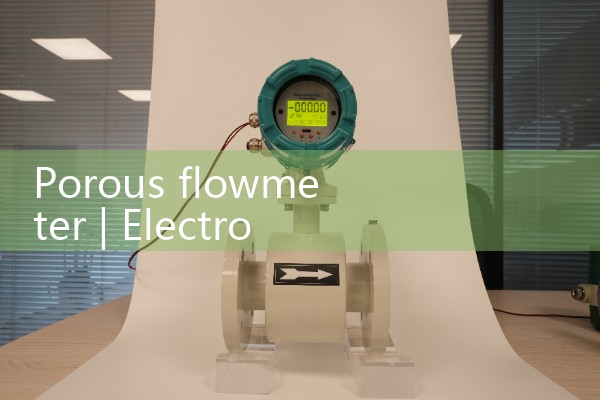
2. Measurement accuracy: High resolution signal processing and adaptability to complex working conditions. Based on a stable differential pressure signal, the balanced flowmeter achieves high-precision measurement through the following techniques: True flow reflection: The porous structure makes the differential pressure change linearly related to the fluid flow rate, avoiding the accuracy decline caused by nonlinear errors in conventional flowmeters.
. High resolution differential pressure transmitter: with high-precision sensors (accuracy up to ± 0.075%), even small flow changes can be accurately captured. Intelligent signal processing unit: By using digital filtering and temperature compensation algorithms, the influence of changes in medium density and viscosity on measurement results is eliminated, ensuring a measurement accuracy of ± 0.5% even in low flow rates (≤ 0.1m/s), high viscosity (such as heavy oil), or media containing impurities. Long term stability: The stability of differential pressure signals reduces the frequency of calibration, and in typical application scenarios, the calibration cycle can be extended to 2-3 years, reducing maintenance costs and downtime.III. Adaptability to working conditions: Special materials and compact design to cope with complex environments. Balance flow meters meet the diverse needs of industrial scenarios through material and structural optimization: medium compatibi
 Hot Blog
 Related AD