

『Refrigerant Flow Meter for Cold Storage: Reliable Flow Data in Sub-Zero Vaults』Related information(clamp on meter|electromagnetic meter|venturi meterrotameter|orifice meter|ultrasonic flow meter|mass flow meter|coriolis mass flow meter|coriolis flow meter|magnetic flow meter|magmeter flow meter|magflow flow meter|mag meter flow meter|electromagnetic flow meter|vortex flow meter|turbine flow meter|thermal mass flow meter|thermal flow meter|rotameter flow meter)
Refrigerant Flow Meter for Cold Storage: Reliable Flow Data in Sub-Zero Vaults
Quick Answer
For cold storage refrigerant circuits, Coriolis mass flow meters deliver the best accuracy at temperatures as low as -40 °C. The direct mass measurement in kg/h ignores density shifts caused by sub-zero conditions. Silver Instruments supplies the Coriolis meter with integrated PT100 sensor and 4-20 mA HART output. Send us your refrigerant type, pipe diameter DN, pressure in bar, and lowest operating temperature to get a quote with EXW price.
Why Standard Flow Meters Struggle Inside Freezer Chambers
Most operators find out the hard way. A turbine meter or vortex meter working fine at +20 °C can drift badly when installed in a blast freezer room at -30 °C. The problem is not the meter body itself. It is the physical property of the refrigerant. Liquid density changes by 0.8% to 1.2% per 10 °C drop for common refrigerants like R404A, R507, or ammonia. A volumetric flow meter like a turbine meter sees only m³/h. The density shift creates a mass flow error that the Volume Correction Factor cannot fully compensate at very low temperatures. In practice, our team has seen a 4.5% under-read in an ammonia pump recirculation line inside a seafood cold store in Thailand. That error played havoc with the evaporator superheat control.
Velocity-based meters like inline ultrasonic or vortex devices face a second hurdle. At low refrigerant temperatures, the Reynolds number often drops below 20 000. The flow profile turns laminar in some sections. No amount of straight pipe run can fix that. Silver Instruments has factory tests showing that a vortex meter output jumps 1.8% when the fluid temperature falls from +10 °C to -25 °C, even with correct K-factor programming.
Coriolis Meters Solve the Sub-Zero Density Problem
Coriolis mass flow meters measure kilograms per hour directly. They do not need a separate densitometer or pressure/temperature correction lookup table. Inside the twin tubes, the fluid mass drives the Coriolis twist. That twist is what the meter uses. Not velocity, not volume. So a change from +5 °C to -35 °C on R507 does not touch the mass reading accuracy. The meter remains within ±0.1% to ±0.15% of rate. Our customers in Gulf countries use the same Coriolis model for their ammonia cold stores and their ambient-temperature glycol loops. No reprogramming needed.
With Silver Instruments Coriolis meter, you get a built-in PT100 temperature sensor and a digital signal processor that outputs 4-20 mA HART, Modbus RTU, or pulse. The electronics head is remote-mountable, separate from the sensor block. In a -40 °C vault, mount the transmitter outside the cold room. The sensor body stays in the pipe and handles the temperature without a heat trace. The secondary containment rating meets safety needs for ammonia R717 plants.
Specific Installations We Have Supported
A cold chain logistics company in Kenya operates a 120 000-bird poultry freezer. Their liquid ammonia line is DN25, running at 14 bar gauge, -32 °C. They originally installed an oval gear meter from another brand. After six months, the graphite bearings seized because the lubricity drop at low temperature was not accounted for. Silver Instruments supplied a single straight-tube Coriolis meter, DN25, 316L wetted parts, with ATEX Zone 1 certification for the machine room. Now they read ammonia mass flow to the evaporative condenser at 1150 kg/h with repeatability better than 0.05%.
In a large fruit cold storage in Chile, our ultrasonic flow meter model was used on the glycol secondary loop. The clamp-on transducers were installed outside the pipe insulation, avoiding any cold-bridge. But for the primary R404A loop inside the blast freezer, the customer chose the Coriolis meter because the pipe surface frost buildup would degrade the ultrasonic coupling over time. The Coriolis meter, with inline welding, eliminated that coupling issue.
What Most Engineers Skip When Specifying Meters for Cold Storage
Here is the thing. The pressure drop across a Coriolis meter at low temperature is often miscalculated. The fluid viscosity of liquid refrigerant at -30 °C can be 0.12 cP to 0.25 cP, thinner than water. That means the pressure loss is lower t
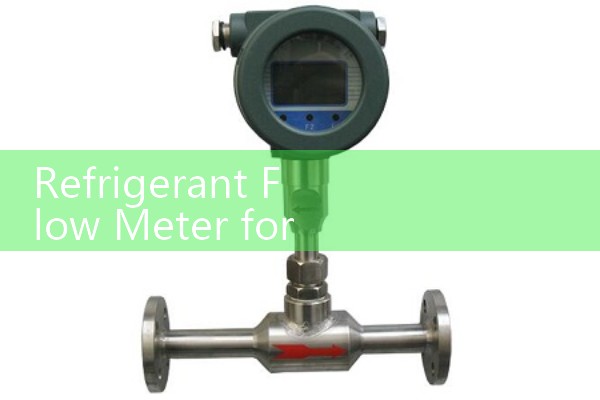
Another detail: the local display. LCD screens go black below -20 °C unless you buy an extended-temperature display. Our standard remote transmitter with OLED works at -40 °C ambient. In machine rooms without heating, the OLED stays readable. We have seen this on customer sites many times. A cheap LCD display turns into a black rectangle during defrost cycles.
Pressure Transmitter and Data Recording for Complete Audit Trails
Cold storage operators often need to prove compliance with food safety standards like BRC or SQF. A flow meter alone is not enough. You need a paperless recorder or a data acquisition module that logs pressure, temperature, and flow on the same timeline. Silver Instruments offers a 12-channel paperless recorder. It reads the 4-20 mA HART signal from the Coriolis meter and the 4-20 mA from our pressure transmitter installed at the compressor suction. The recorder timestamps every data point and stores it on a USB stick. In a beef export plant in Paraguay, this setup provided the auditable evidence for the refrigeration cycle efficiency report required by an EU import certificate.
Our pressure transmitter for ammonia service uses a flush diaphragm with Hastelloy C-276 membrane and a PTFE vented cable. Range is 0 to 25 bar absolute. Accuracy is 0.1% FS. It sits directly on the ammonia line without a pigtail syphon because the fluid temperature is already low. No need for extra cooling. The transmitter and flow meter speak the same protocol, which makes integration with the cold storage PLC a one-day job.
FAQ: Refrigerant Flow Measurement in Sub-Zero Environments
Which flow meter technology is best for liquid ammonia at -33 °C?
Coriolis mass flow meters are the top choice. They give mass flow in kg/h with ±0.1% accuracy, no density correction required. Silver Instruments also offers electromagnetic flow meters, but only for water/glycol secondary loops, not for anhydrous ammonia.
Does a vortex meter work for R404A at low temperature?
Vortex meters can work if you have enough straight pipe and the Reynolds number stays above 20 000. But accuracy shifts by 1% to 2% with temperature changes. We recommend Coriolis meters when budget permits, because they eliminate the need for a flow computer and separate temperature sensor.
Can I install a flow meter inside the freezer room without a heated enclosure?
Yes. Select a Coriolis meter with remote electronics. Mount the sensor body on the pipe inside the cold room. Install the transmitter outside the room. The sensor handles -40 °C to -50 °C ambient. The OLED transmitter outside stays readable. Silver Instruments supplies cables up to 30 m.
What is the typical price of a Coriolis meter for a DN25 refrigerant line?
For a basic DN25 Coriolis meter with 4-20 mA HART, 316L tubes, and ATEX Zone 2, EXW price is around 2 800 to 3 400 USD depending on the flange standard. Tell us your pipe schedule, pressure class, and hazardous zone requirement to get a formal quote.
How do you prevent meter issues during defrost cycles or two-phase flow?
We recommend a low-drive-frequency Coriolis meter for refrigerant services. It handles small amounts of gas bubbles during pull-down. Add a suction strainer upstream to protect the meter from any particle. Silver Instruments can provide the strainer with the meter package.
For technical selection and a firm quotation, email [email protected] with your refrigerant type, design flow range, pipe diameter (DN), and coldest operating temperature. Or call +86-25-68650347, message us on WhatsApp at +86-25-52155837, or contact us via WeChat +86 15365082610. We ship to cold storage plants across Southeast Asia, the Gulf, Latin America, Africa, and Oceania.
 Hot Product
 Related AD