

『Oil Flow Meter for Engine Test Bench: Tracking Fuel Consumption and Efficiencies』Related information(clamp on meter|electromagnetic meter|venturi meterrotameter|orifice meter|ultrasonic flow meter|mass flow meter|coriolis mass flow meter|coriolis flow meter|magnetic flow meter|magmeter flow meter|magflow flow meter|mag meter flow meter|electromagnetic flow meter|vortex flow meter|turbine flow meter|thermal mass flow meter|thermal flow meter|rotameter flow meter)
Oil Flow Meter for Engine Test Bench: Tracking Fuel Consumption and Efficiencies
Quick Answer
For an engine test bench, a Coriolis mass flow meter gives you direct fuel mass flow, density, and temperature in real time. This beats volumetric meters because you do not need to correct for fuel temperature swings from 20 °C to 80 °C. Silver Automation Instruments supplies compact Coriolis sensors from DN2 to DN15, with 0.1 % accuracy, 4-20 mA HART, and RS485 Modbus outputs.
Why Mass Flow Matters on an Engine Test Bench
Engineers need to measure fuel consumption in kilograms per hour, not liters per hour. A liter of diesel at 15 °C contains more mass than a liter at 50 °C. The engine burns mass, not volume. Brake specific fuel consumption and thermal efficiency are both calculated from mass. So you either measure mass directly, or you measure volume and add a density lookup table. Most engineers skip the table. A Coriolis meter from Silver Instruments outputs mass flow instantly, which speeds up your test runs and removes one source of error.
Direct Fuel Mass Measurement Bypasses Temperature Errors
On a hot test cell day, return fuel can easily reach 70 °C. Volumetric meters like oval gear or turbine type drift with viscosity and thermal expansion. Here is the thing. A Coriolis flow meter does not care if the fuel is cold diesel, hot Jet A, or ethanol blend. It measures mass flow using the Coriolis principle, not moving parts. That means no wear, no recalibration after a viscosity change. Many customers in Southeast Asia and the Middle East have seen this on their test benches. Their volumetric meters needed frequent correction factors. After switching to a Coriolis, they locked in repeatability of 0.05 %.
What Flow Meter Technology Fits a Test Cell
We have seen both Coriolis and oval gear meters used on engine test benches. For high accuracy and multi-fuel flexibility, pick a Coriolis mass flow meter. Our CMF series (DN4, DN6, DN8, DN15) covers flow ranges from 0.2 kg/h up to 2,000 kg/h. The wetted parts are 316L stainless steel, compatible with diesel, gasoline, biodiesel, and methanol. For a low-cost single-fuel setup where you only measure diesel at stable temperature, an oval gear flow meter with a pulse output can work. But you still need a density input. In practice, Coriolis saves you time and avoids arguments about measurement uncertainty with your customers.
Key Specifications That Test Engineers Ask For
We collect the following data points every time an engine lab sends an inquiry. Pipe size is usually DN4 or DN6. Full scale flow ranges from 1 kg/h to 100 kg/h for small single-cylinder engines, and up to 500 kg/h for heavy-duty diesels. Process pressure is often below 10 bar, but some common-rail injection return lines see 20 bar. Maximum fuel temperature can reach 120 °C near the engine. Required accuracy is typically ±0.1 % of rate over a 20:1 turndown. Output signals are 4-20 mA HART, pulse for totalizing, and RS485 Modbus RTU. Hazardous area rating is ATEX Zone 2 or IECEx if the test cell handles volatile fuels.
A Real Case: Diesel Engine Testing in Thailand
Last year a customer in Thailand asked us to replace a turbine flow meter on their generator engine test bench. Their flow range was 8 kg/h to 80 kg/h, diesel fuel, DN6 tube. Ambient temperature in the test cell often hit 45 °C, and return fuel was around 65 °C. The turbine meter gave a different m3/h r
Installing the Meter Close to the Engine
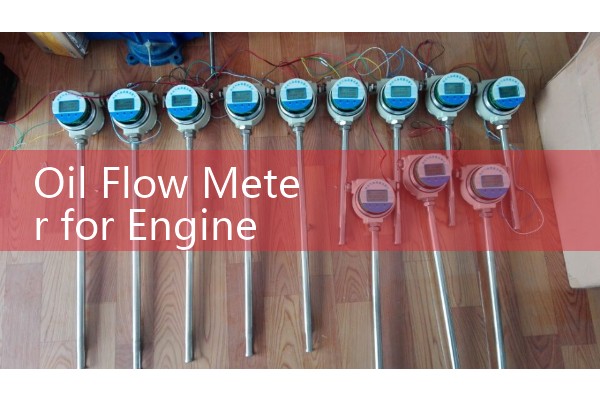
Mount the flow meter close to the fuel supply inlet or on the return line. Keep the meter tubes full. Avoid installing it at the highest point of the piping, because air bubbles corrupt the density reading. Use a 50-micron strainer upstream to protect the small bore tubes. The meter body has no moving parts, so you can install it in any orientation, but we recommend flow going upward to self-purge air. A rigid support bracket helps if engine vibration exceeds 2 g. All our Coriolis meters ship with a factory calibration certificate traceable to ISO 17025.
Getting a Quote and Technical Selection
Do not send a generic contact form. To get a fast and accurate proposal for an oil flow meter for your engine test bench, email your project details to our applications team. We need your fuel type, minimum and maximum flow rate in kg/h, pipe size in DN, operating pressure in bar, and maximum temperature in degree C. We will reply with a recommended model, wiring diagram, and price in AUD or USD. You can also request a test report with your actual fluid. Most quotes go out within one working day. Silver Automation Instruments ships directly to Australia, the Middle East, Southeast Asia, Latin America, and Africa.
Frequent Questions on Oil Flow Meters for Engine Test Benches
Can I use a Coriolis meter for both supply and return fuel lines?
Yes. Many test benches measure net consumption by putting one meter on the supply line and a second on the return line. Both meters output mass flow, and the PLC subtracts return from supply to get net fuel burned. This method eliminates errors from hot return fuel, because each meter independently corrects for temperature.
What accuracy can I achieve without a weigh scale?
A typical Coriolis meter from Silver Instruments gives ±0.1 % of rate for liquids. On a 50 kg/h fuel flow, that means total uncertainty of 0.05 kg/h. Most engine labs find this matches their gravimetric scale within 0.2 %, so they stop using the scale for everyday tests.
Does the meter work with ethanol and methanol blends?
Yes. 316L wetted parts are compatible with gasoline, ethanol, methanol, and biodiesel blends up to B100. The meter measures density in real time, so you can also verify the fuel blend ratio automatically. No recalibration is needed when you switch from diesel to an alcohol fuel.
What output signals connect to a test bench PLC?
We deliver 4-20 mA HART for mass flow, separate 4-20 mA for density or temperature, and RS485 Modbus RTU. Some models also offer pulse output for total fuel consumed. All signals are galvanically isolated. Wiring diagrams with pin assignments are included in every manual.
How do you handle small flow rates below 1 kg/h?
Our smallest Coriolis sensor is DN2 with a minimum flow of 0.2 kg/h. It is designed for single-cylinder research engines. The meter body fits on a DIN rail mount. It still delivers 0.2 % accuracy at 0.2 kg/h, which is enough to track fuel consumption during idle and warm-up cycles.
 Hot Product
 Related AD