

『How to Calibrate Water Flow Meter: Building an Automated Tank Testing Test Bench』Related information(clamp on meter|electromagnetic meter|venturi meterrotameter|orifice meter|ultrasonic flow meter|mass flow meter|coriolis mass flow meter|coriolis flow meter|magnetic flow meter|magmeter flow meter|magflow flow meter|mag meter flow meter|electromagnetic flow meter|vortex flow meter|turbine flow meter|thermal mass flow meter|thermal flow meter|rotameter flow meter)
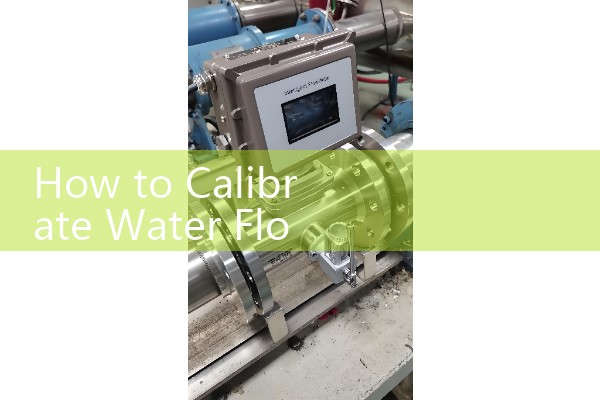
How to Calibrate a Water Flow Meter Using an Automated Tank Testing Test Bench
Quick Answer: A practical way to calibrate a water flow meter is to build an automated tank testing test bench with a weigh scale or a master meter. Collect water in a tank, take mass or volume data, and compare the result with the meter pulse or 4-20 mA output. Silver Automation Instruments supplies electromagnetic and oval gear flow meters commonly used on these water test benches.
Most flow meter calibration work does not need a full national metrology lab. A small panel shop or a water utility workshop can build a water flow meter calibration test bench that gives repeatable results. We have seen this on customer sites from Vietnam to Peru. The key is not the size of the bench. The key is stable flow, clean water, and a trusted reference.
What an Automated Tank Test Bench Should Include
A standard water test bench starts with a reservoir tank, a pump with a variable frequency drive, a test section, a drain tank on load cells, a temperature sensor, and a pressure transmitter. Use a PT100 for water temperature. Use a pressure transmitter with a range like 0 to 6 bar for a low pressure water line. The PLC opens the fill valve, ramps the pump, waits for flow to settle, and records data.
For the reference, you have two choices. A gravimetric tank with load cells works well for low uncertainty work. A master flow meter works well for faster tests. In practice many water meter shops use both. The load cell system checks the master meter twice a year.
Step 1: Build the Test Loop with Proper Straight Pipe
Install the meter under test between straight pipe sections. For an electromagnetic flow meter, keep at least 5 diameters of straight pipe upstream and 3 diameters downstream. For a DN50 meter, that means about 250 mm upstream and 150 mm downstream. For an oval gear flow meter, straight pipe is less critical because positive displacement meters are less sensitive to swirl.
Place valves away from the meter. Most engineers skip this part on the first build and then see unstable readings. Air bubbles collect in high spots. Install a manual or automatic air release valve at the highest point of the loop. Keep the test section full of water at all times. A partially full pipe gives large errors on electromagnetic and ultrasonic meters.
Step 2: Choose the Reference Meter or Weigh Scale
A gravimetric method gives better accuracy if the load cells are good. Load cells with 0.05 percent of full scale accuracy are common on water test benches in Southeast Asia. A 300 kg platform can calibrate a DN25 meter at 2 cubic meters per hour easily. Weigh the empty tank, fill for 60 seconds, weigh the full tank, and subtract.
A master meter method is faster. Silver Automation Instruments supplies electromagnetic flow meters for water and wastewater. A DN80 electromagnetic meter with 4-20 mA HART and pulse output works as a master meter on many small test benches. The meter should be calibrated once a year against a higher accuracy reference. Use a pulse output for the batch total. But the 4-20 mA signal alone is not enough for calibration. Resolution drops at low flow.
Step 3: Automate the Fill Sequence
Here is the thing. Manual valves make the data scattered. Use a PLC and an HMI. Define a sequence with steps: close drain valve, open fill valve, start pump, ramp to setpoint, wait 20 seconds for stable flow, reset totalizers, fill for 60 seconds, close valve, record reference mass and meter pulses.
Run three batches at each flow setpoint. For a water meter sized DN25, typical setpoints are 1, 5, and 15 cubic meters per hour. For a DN50 electromagnetic flow meter, typical setpoints are 5, 20, and 50 cubic meters per hour. Record water temperature from the PT100 and pressure from the transmitter for each batch.
Step 4: Calculate the K Factor and Error
Most water meters output pulses per liter or pulses per cubic meter. The K factor is the number of pulses per unit volume. Compare the meter totalizer with the
For a mass method, convert mass to volume using water density. At 25 °C water density is about 997 kg per cubic meter. At 15 °C it is about 999 kg per cubic meter. Without temperature correction, volume error can be around 0.2 percent. This matters on a 0.5 percent bench.
Step 5: Adjust the Meter and Document the Test
Some Silver Instruments electromagnetic flow meters allow K factor adjustment through the local display or Modbus. Some oval gear meters have a mechanical adjustment. Only adjust after you have repeatable data. Change the K factor, run three more batches, and check the error again.
Record the result on a paperless recorder or in a simple CSV log. A customer in the Philippines built a bench for DN15 to DN50 water meters. They use a Silver Instruments electromagnetic flow meter as the master meter and a weigh tank as a cross check. After moving the fill valve downstream of the test section, their repeatability stayed within 0.15 percent across a 10 to 1 flow range.
Common Problems on Water Flow Meter Test Benches
Air in the line gives noisy readings. Grounding is critical for electromagnetic flow meters on plastic or lined pipe. Use grounding rings if the pipe is non-conductive. Low conductivity water below 20 µS/cm can cause unstable readings on electromagnetic meters. Vibration from the pump disturbs load cells. Use flexible hoses and place the weigh tank on a separate steel frame.
Pressure fluctuations also cause errors. A simple pressure regulator or a VFD ramp profile helps smooth the flow. Do not run the pump against a closed valve for too long. Water heats up and the test condition drifts.
Recommended Flow Meters for Water Calibration Test Benches
Silver Automation Instruments supplies several flow meter types for water test benches. An electromagnetic flow meter is the most common choice for water and wastewater. Sizes start at DN15 and go up to DN300. Outputs include 4-20 mA HART, pulse, and RS485 Modbus. An oval gear flow meter works well for low flow testing or batching oils. An ultrasonic clamp-on meter can verify an existing line without cutting pipe.
We also supply pressure transmitters and paperless recorders for the bench. Tell us your pipe size in DN, flow range in cubic meters per hour, pressure in bar, and water temperature in degrees Celsius. We will recommend a meter and send a quote.
Frequently Asked Questions
How accurate can a water flow meter calibration bench be?
A small automated gravimetric bench can reach 0.25 to 0.5 percent expanded uncertainty if load cells are good and air is removed. A master meter bench without temperature correction is usually around 1 percent.
Do I need a weigh tank or a master flow meter?
Use a weigh tank when you need higher accuracy. Use a master meter when you need faster test cycles and have a calibrated reference meter.
Can I calibrate a DN150 electromagnetic flow meter on a small bench?
Yes if your pump and pipe size support the flow range. You need a larger reservoir and a master meter of similar size. Flow stability matters more than bench footprint.
What water quality is required for electromagnetic flow meters?
Conductivity should be above 20 µS/cm. Clean water with no large air bubbles. For deionized or low conductivity water, use an ultrasonic or oval gear meter instead.
How often should I calibrate a master meter on a test bench?
For water meters in industrial service, once per year is common. If the reference is used daily or for billing, check it against a gravimetric tank every six months.
To request a quote for water flow meters and calibration bench instruments, contact Silver Automation Instruments. Tel: +86-25-68650347. Whatsapp: +86-25-52155837. WeChat: +86 15365082610. Send your pressure in bar, temperature in degrees Celsius, pipe size in DN, and flow range. We will reply with a model and price.
 Hot Blog
 Related AD