

 Current position > News detail
『Krohne Flow Meter Manure Sizing: Rugged Electromagnetic Systems for Slurry and Waste Management』Related information(clamp on meter|electromagnetic meter|venturi meterrotameter|orifice meter|ultrasonic flow meter|mass flow meter|coriolis mass flow meter|coriolis flow meter|magnetic flow meter|magmeter flow meter|magflow flow meter|mag meter flow meter|electromagnetic flow meter|vortex flow meter|turbine flow meter|thermal mass flow meter|thermal flow meter|rotameter flow meter)

Krohne Flow Meter Manure Sizing: Rugged Electromagnetic Systems for Slurry and Waste Management
Quick Answer: For manure, slurry, and liquid waste, use an electromagnetic flow meter with a polyurethane or hard rubber liner, 316L or Hastelloy electrodes, and a flow velocity between 1.0 and 3.0 m/s. Silver Instruments supplies DN25 to DN600 rugged magmeters for dairy, pig farm, biogas, and industrial waste lines. Send your pipe size (DN), solids content, pressure (bar), temperature (°C), and flow range (m³/h) for a direct quote.
Why Manure and Slurry Flow Measurement Is Different
Most engineers skip this part and size a slurry meter on line size. That works for clean water but not for manure. Manure has fibres, sand, grit, and changing dry matter content. We have seen this on customer sites many times: a meter sized only on DN80 pipe fails early because velocity stays below 0.5 m/s at low flow. Solids settle. Electrodes get coated. Readings drift.
Here is the thing. Krohne flow meter manure sizing is a common search because the brand is known in biogas and agricultural projects. In practice, Silver Instruments rugged electromagnetic systems follow the same sizing logic. The difference is direct factory pricing and shorter lead time for buyers in Southeast Asia, Oceania, Latin America, Africa, and the Middle East.
Sizing Rules for Manure Slurry and Digestate
Start with actual flow range. A DN50 meter handles about 5 to 15 m³/h at 0.7 to 2.1 m/s. A DN80 meter handles 10 to 40 m³/h at 0.55 to 2.2 m/s. A DN100 meter handles 20 to 80 m³/h at 0.7 to 2.8 m/s.
Keep clean velocity above 1.0 m/s to prevent settling. Keep abrasive slurry below 3.0 m/s. For dairy manure with 5 to 8 percent dry matter, 1.5 to 2.5 m/s works well. For thin pig slurry under 3 percent dry matter, you can go 1.0 to 2.0 m/s. For digestate with 8 to 12 percent dry matter, stay near 2.0 to 3.0 m/s and use a polyurethane liner.
Liner Electrode and Grounding Decisions
Liner selection depends on abrasion. Polyurethane handles sand, grit, and fibrous bedding better than hard rubber. Hard rubber is cheaper and works for fine slurry with low sand content. PTFE liner is not a good choice for manure because it can be damaged by solids and is harder to ground.
Electrode choice matters. 316L stainless steel works for normal dairy and pig slurry. Hastelloy C works better for acidic silage leachate, chemical cleaning agents, or slurry with hydrogen sulfide. For food or drinking water waste lines, check local approvals before ordering.
Grounding rings or built-in grounding electrodes are required on plastic or lined pipes. Most agricultural slurry lines use PVC or PE pipe. Without proper grounding, the meter will show unstable readings. In metal pipe, standard grounding is often enough.
Installation Advice for Agricultural and Biogas Sites
Do not install a magmeter at the lowest point of a manure line where solids collect. Install it in a pipe section that stays full. Mount it with the electrodes horizontal if possible. This avoids gas bubbles sitting on the electrodes and solids coating the liner.
A dairy farm in Victoria, Australia used a DN80 Si
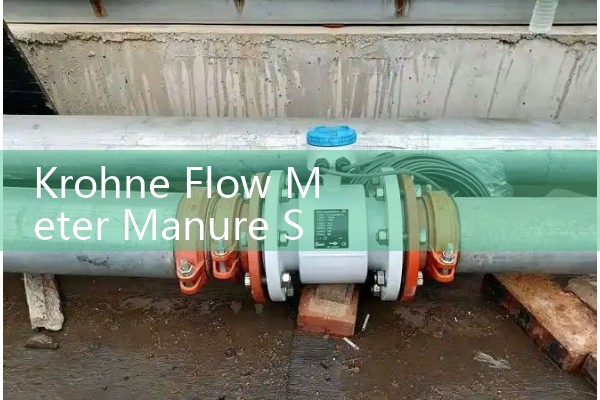
In Vietnam, a pig farm needed a DN100 meter for lagoon sludge with 4 percent solids. We supplied 316L electrodes and a hard rubber liner because the slurry had no sand. The customer used a 4-20 mA HART output to the feed pump control panel.
Ex Protection, Output, and Empty Pipe Detection
Many manure and biogas facilities have methane. If the flow meter sits in an explosive gas zone, specify ATEX Zone 1 or Zone 2 certification. Silver Instruments can supply compact or remote versions with Ex d or Ex ia approval. Tell us the zone classification in your inquiry.
Use empty pipe detection on batch discharge lines. It prevents the pump from running dry and stops false totalizer counts when the pipe drains. For outputs, 4-20 mA HART covers most control rooms. Pulse output works for batching. RS485 Modbus is available for PLC integration.
Krohne Alternative for Manure Sizing
Engineers often search for Krohne flow meter manure sizing because they have a datasheet or an old project specification. Silver Instruments rugged electromagnetic flow meters are a direct alternative for DN25 to DN600 lines. You get the same sizing method, similar liner and electrode options, and lower procurement cost.
We support English, Spanish, Arabic, and Portuguese inquiries. Stock is available in China for common DN50, DN80, DN100, DN150, and DN200 sizes. For larger sizes, lead time is usually 7 to 15 working days.
Silver Instruments Contact Details for Slurry Flow Meter Quotes
Send your pressure (bar), temperature (°C), pipe size (DN), solids content (percent dry matter), and flow range (m³/h). You can call +86-25-68650347, WhatsApp +86-25-52155837, or WeChat +86 15365082610. The website is flow-meter.com.au.
Most inquiries get a sizing answer within 24 hours.
Frequently Asked Questions
What size electromagnetic flow meter do I need for dairy manure?
Start with flow range, not pipe size. DN50 suits 5 to 15 m³/h. DN80 suits 10 to 40 m³/h. DN100 suits 20 to 80 m³/h. Keep velocity between 1.5 and 2.5 m/s for dairy slurry with 5 to 8 percent dry matter.
Can I use a magmeter on thick slurry with sand?
Yes. Use a polyurethane liner and Hastelloy C or 316L electrodes. Keep velocity below 3.0 m/s to limit liner wear. Grounding rings are required on plastic pipe.
What liner lasts longest in pig manure?
Hard rubber is usually enough for pig slurry with low sand content. If the waste contains grit or fibrous feed, polyurethane lasts longer.
Do I need grounding rings on plastic pipes?
Yes. PVC and PE pipes are common in manure systems. Without grounding rings or built-in grounding electrodes, the meter reading will be unstable.
What is the typical delivery time for a manure flow meter?
Common DN50 to DN200 sizes are often in stock. Lead time is 7 to 15 working days for larger sizes or special liners. Contact Silver Instruments with your full parameters for an exact quote.