

 Current position > News detail
『Gas Turbine Flow Meter Rotor Dynamics and Custody Transfer Standards』Related information(clamp on meter|electromagnetic meter|venturi meterrotameter|orifice meter|ultrasonic flow meter|mass flow meter|coriolis mass flow meter|coriolis flow meter|magnetic flow meter|magmeter flow meter|magflow flow meter|mag meter flow meter|electromagnetic flow meter|vortex flow meter|turbine flow meter|thermal mass flow meter|thermal flow meter|rotameter flow meter)

Gas Turbine Flow Meter Rotor Dynamics and Custody Transfer Standards
Quick Answer: Rotor dynamics control how a gas turbine flow meter keeps its accuracy over time. Balanced rotors and hard bearings are essential for custody transfer. Silver Instruments supplies turbine meters that meet AGA-7, ISO 9951, and OIML R137 standards for natural gas, nitrogen, and compressed air.
Why Rotor Dynamics Matter in Gas Custody Transfer
Gas flowing through a turbine meter spins the rotor at a speed proportional to the flow rate. The bearings and rotor balance determine the turndown ratio and low-flow linearity of the meter. Over time, bearing wear changes the K-factor. A shift of just 0.2 percent can cause billing errors worth thousands of dollars on a gas export line. Silver Instruments uses tungsten carbide journal bearings and dynamically balances each rotor. The factory calibration delivers a stable K-factor from Qmax down to Qmin at a 10:1 turndown. Many engineers trust this design because it simply works. But when a meter fails a proving test, rotor friction is the first thing we check. We helped a gas plant in Indonesia replace meters with sticky bearings. After switching to our DN100 turbine meter, custody transfer accuracy returned to within plus or minus 0.5 percent.
Standards That Define Turbine Meter Performance
AGA-7 is the key standard for turbine meters in natural gas custody transfer. ISO 9951 specifies calibration requirements for dry gas. OIML R137 sets the legal metrology framework. Silver Instruments turbine meters leave the factory with a traceable calibration certificate. We calibrate on a high-pressure air rig at 20 bar and 40 bar, matching field operating pressure. For a LNG terminal in the Philippines, we supplied DN150 meters with 0.5 percent linearity over a 40:1 turndown.
Rotor Material, Bearings, and Pressure Ratings
Standard rotors use aluminum alloy for natural gas. Stainless steel rotors are available for CO2 or nitrogen. Bearings make the biggest difference. Silver Instruments fits tungsten carbide sleeve bearings as standard. These bearings handle clean dry gas for over 50,000 hours. For high-pressure gas measurement up to 100 bar, we reinforce the body and shaft. A typical DN80 meter measures 10 to 650 cubic meters per hour at 1 bar absolute with less than 0.5 kPa pressure loss. That makes it ideal for export gas metering skids.
Installation Advice for Custody Transfer Turbine Meters
Plan for 10D upstream and 5D downstream of straight pipe. If you install a Zanker flow conditioner, upstream can drop to 5D. Alway
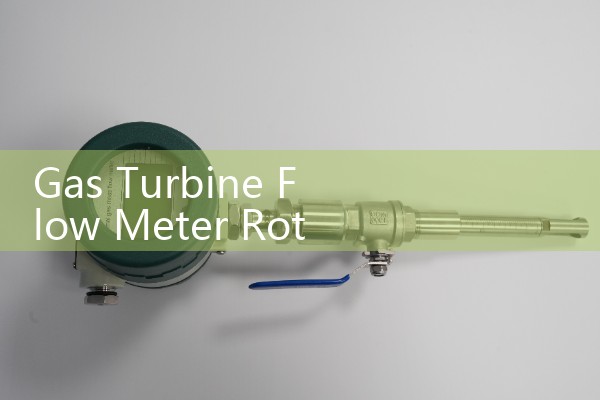
Silver Instruments Gas Turbine Flow Meters for Export and Process Gas
We build turbine meters from DN15 to DN300. Pressure classes cover PN16 through PN100. Standard output signals are 4-20 mA HART with an optional RS485 Modbus. A frequency output can connect to a flow computer. The meters handle natural gas, nitrogen, compressed air, and dry biogas. For hazardous areas, we supply ATEX Ex d IIC T6 certifications. IECEx is available on request. Operating temperature ranges from minus 20 to plus 80 degrees C. An integrator in Australia buys our DN50 turbine meters for compressed air monitoring in food lines. That application shows how rotor dynamics matter even outside custody transfer.
Frequently Asked Questions
Q: What accuracy can I expect from a turbine meter for custody transfer?
A: Standard models deliver plus or minus 0.5 percent of reading over a 10:1 turndown. For 40:1 turndown, we offer a 1.0 percent accuracy version. Every meter includes a 5-point calibration certificate.
Q: Which standards must the meter meet for natural gas export?
A: The main standards are AGA-7, ISO 9951, and OIML R137. Our meters are calibrated according to these norms and come with traceable documentation.
Q: Can the turbine meter handle wet or dirty gas?
A: Turbine meters need clean, dry gas. Always install a filter upstream. If your gas contains moisture or condensate, ask us about a Coriolis or ultrasonic flow meter alternative.
Q: What is the minimum straight pipe for a DN100 meter?
A: We recommend 10D upstream and 5D downstream. Using a flow conditioner reduces upstream to 5D. Avoid partially closed valves that create swirl.
Q: How do I request a quote for a gas turbine meter for custody transfer?
A: Send us your gas type, pressure in bar, temperature in degrees C, pipe size in DN, and the min/max flow rate in kg per hour or cubic meters per hour. We will select the right rotor material, bearing type, and flange rating.
Email: [email protected]
Tel: +86-25-68650347
WhatsApp: +86-25-52155837
WeChat: +86 15365082610